
Majority support the Irish language in Northern Ireland as Good Friday Agreement Generation Leads Shift in Attitudes
Press Release
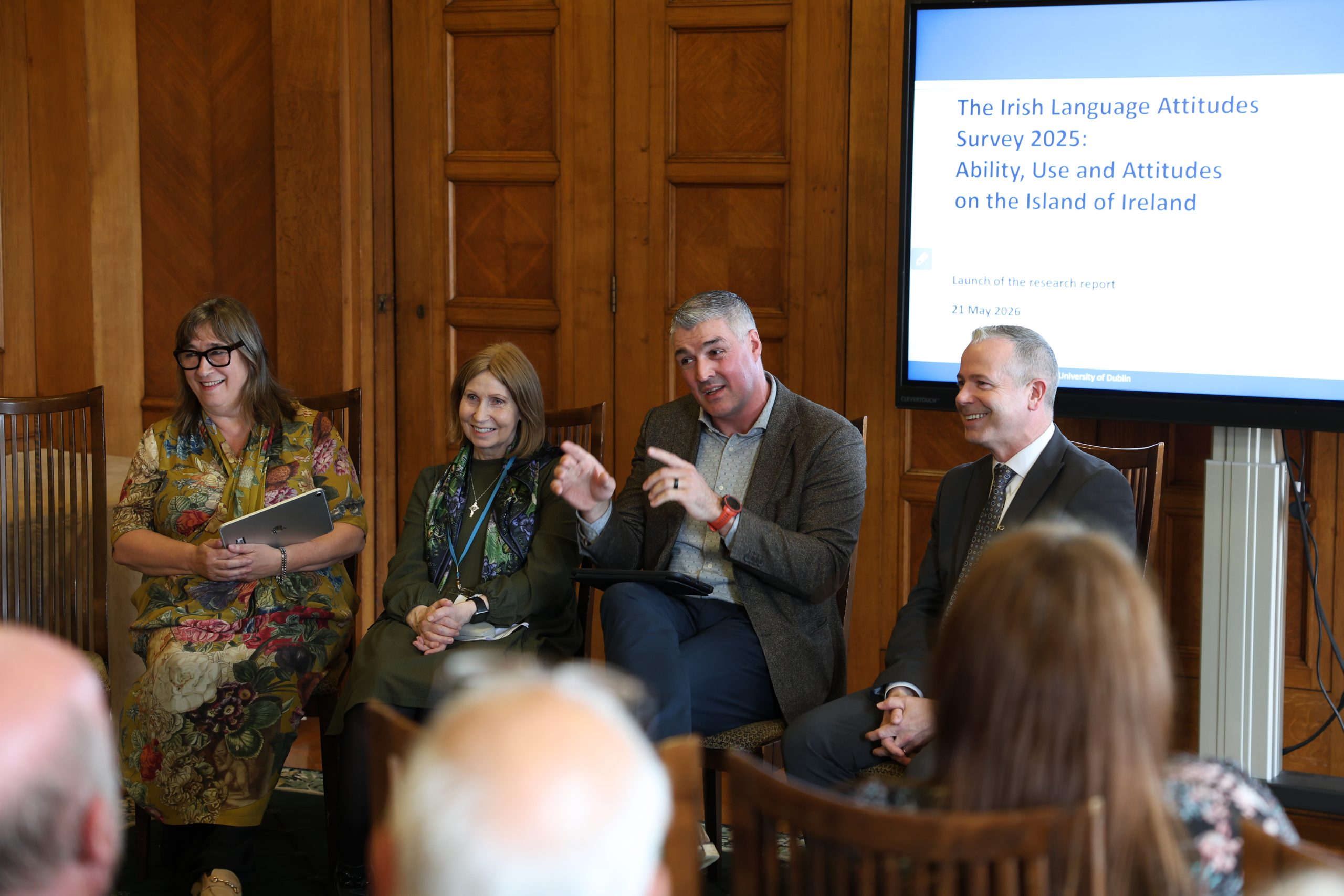
A major new all-island survey has revealed a decisive generational shift in attitudes towards the Irish language in Northern Ireland, with those born after the signing of the Good Friday Agreement emerging as its strongest supporters.
Naomi Long, Minister for Justice in Northern Ireland, when launching the report on the survey at Stormont, said:
“I very much welcome this report and its findings. Whilst the Irish language is often discussed in the context of contention in our society, I believe that it is increasingly recognised as part of our shared cultural wealth. The language has shaped our sense of place, with many place names deriving from the original Irish. The renewed interest in Irish in the Good Friday generation also transcends the divisions in our society, reflecting the freedom people now have to explore their identity and culture with confidence.”
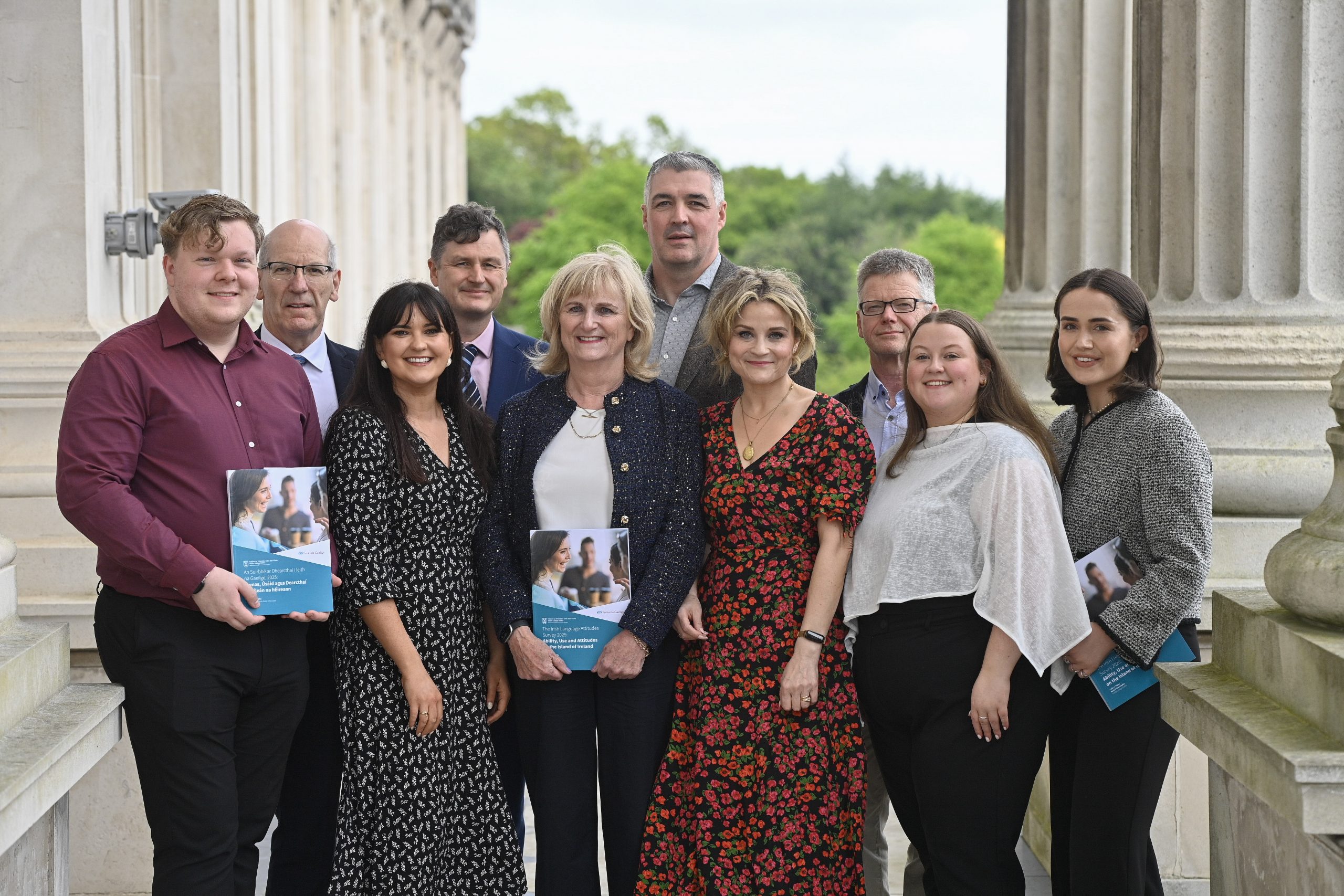
The Irish Language Attitudes Survey 2025, commissioned by Foras na Gaeilge and carried out by Ipsos B&A in partnership with researchers at Trinity College Dublin, shows that younger people in the North are significantly more positive about Irish than previous generations.
The report carried out during the summer of 2025 and authored by researchers in Trinity College Dublin, is the third in a series of all-island surveys commissioned by Foras na Gaeilge since its establishment in 1999, and shows a clear trend towards improving attitudes in the North to Irish.
Strikingly, no respondents aged 18–24 reported any opposition to the language, while 64% of this age group said they were in favour of Irish. Across the wider population in the North, a clear majority (55%) now supports Irish, marking a notable increase on previous surveys – 45% in 2013.
The survey also highlights a growing recognition of the cultural importance of Irish: 51% agree that the North would lose its distinct identity without the Irish language, and only a small minority believe the language should not be supported by government.
Levels of fluency in Northern Ireland remain relatively low, compared to the Republic. However, despite only limited access to opportunities to learn Irish in schools in the North, 19% reported either basic or high levels of fluency corresponding to over 366,000 speakers, and 8% of those surveyed (equating to 154,000 speakers) spoke the language daily or weekly — the report notes that attitudinal change is a key foundation for future growth.
When asked whether they were in favour of, or opposed to, the language; a majority of respondents in both parts of the island (55% in the North) supported Irish. Only 3% in the North indicated that they were strongly opposed to the language, with respondents identifying as British more likely (23%) to be opposed to Irish. A majority in NI (67%) agreed that government should provide all-Irish schools where there is demand.
“This latest report shows a clear pattern of improving attitudes to Irish in the North, which contrasts sharply with how the issue is sometimes portrayed” said Seán Ó Coinn, Foras na Gaeilge CEO. “What is particularly striking is the positivity among younger people, who are the least likely to be opposed to the language.”
Key Findings – Northern Ireland
- Zero opposition towards the Irish language among 18–24-year-olds
- 64% of young people (18–24) support Irish
- 55% overall support for Irish in Northern Ireland, up from 45% in 2013
- Only 3% strongly opposed to the language
- 67% support the provision of Irish-medium schools where there is demand
- 26% of parents would send their children to an Irish-medium school locally, more than double the percentage reported in 2013
Further information:
Media interviews: To arrange an interview, contact Anna Davitt on 087 293 7686 or Loretta Ní Ghabháin on 087-7997981
Additional Documents and graphics
The full report, executive summary and supplementary graphics are available HERE
Photographs
Free to use images will be circulated by 4.30pm approx.
Background
Foras na Gaeilge, the body responsible for the promotion of the Irish language throughout the island of Ireland, was founded on the second day of December 1999.
The study was conducted by Colin J. Flynn and Noel Ó Murchadha of Trinity College Dublin in collaboration with Ipsos B&A.
The study was commissioned by Foras na Gaeilge with funding from the Department of Rural and Community Development and the Gaeltacht during summer 2025.
The questionnaire was developed based on an existing questionnaire that has been used since the 1970s, and that has been adapted to include Northern Ireland and to reflect the context of policy and society today.
About the authors
Colin J. Flynn was the first author of this report. He is an Assistant Professor in Applied Linguistics in the School of Linguistic, Speech and Communication Science in Trinity College Dublin.
Noel Ó Murchadha was the Principal Investigator on this project. He is an Associate Professor in Language Education in the School of Education, Trinity College Dublin.