
Majority north and south now in favour of the Irish language
Press Release
The Irish Language Attitudes Survey was conducted in summer 2025 by Ipsos B&A and Trinity College Dublin for Foras na Gaeilge, with funding from the Department of Rural and Community Development and the Gaeltacht, and is based on face-to-face interviews with 1,498 adults (1,000 in ROI and 498 in NI).
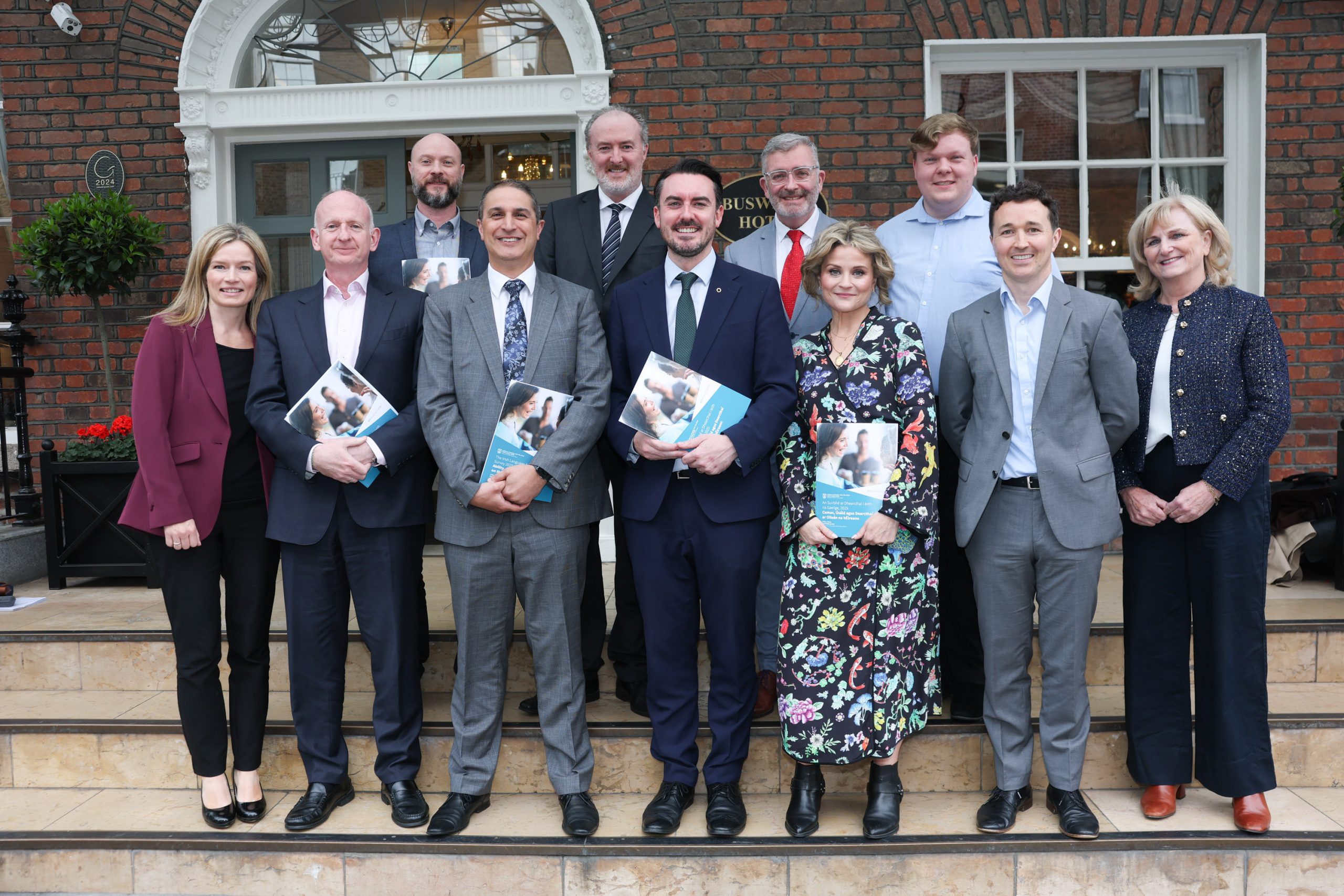
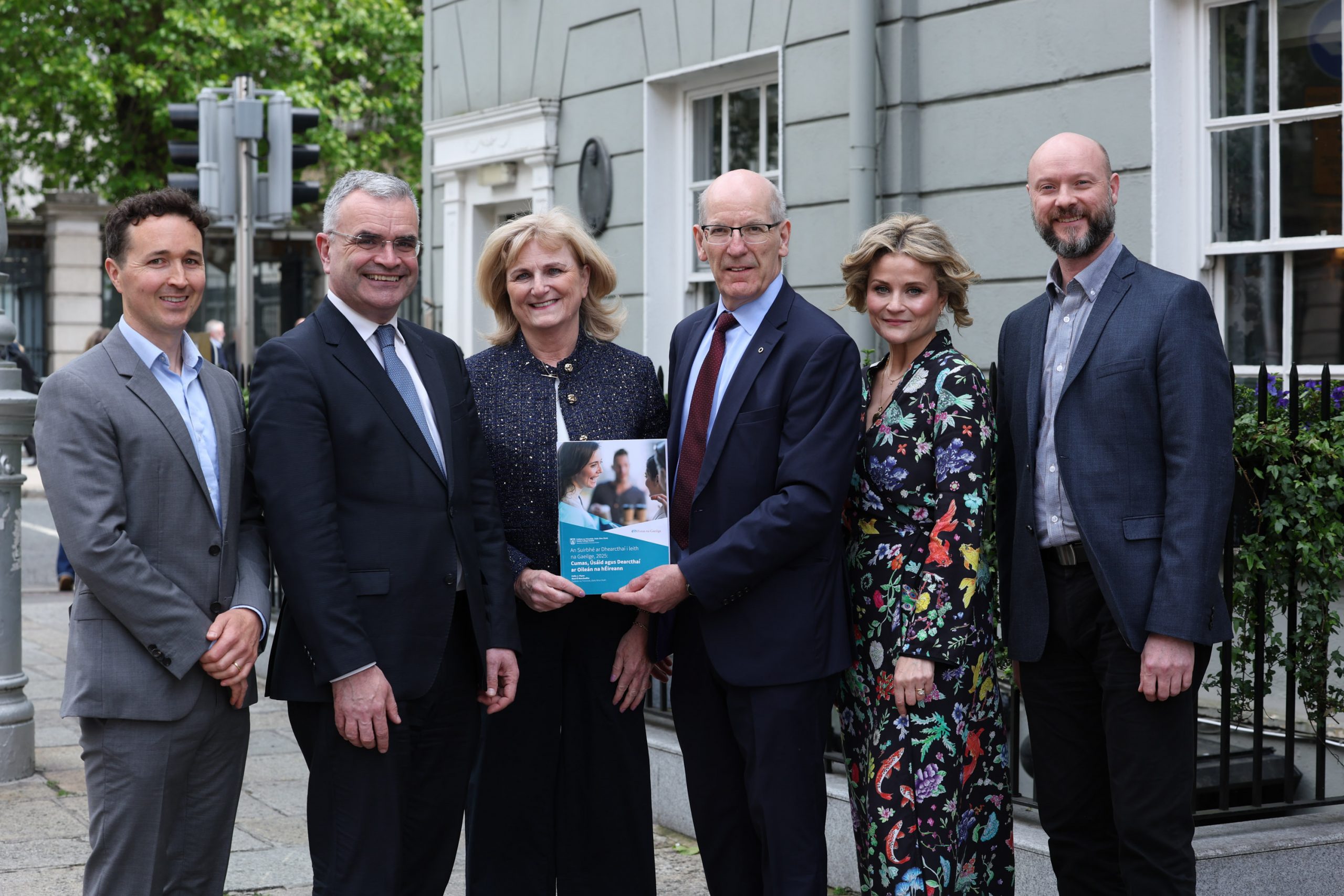
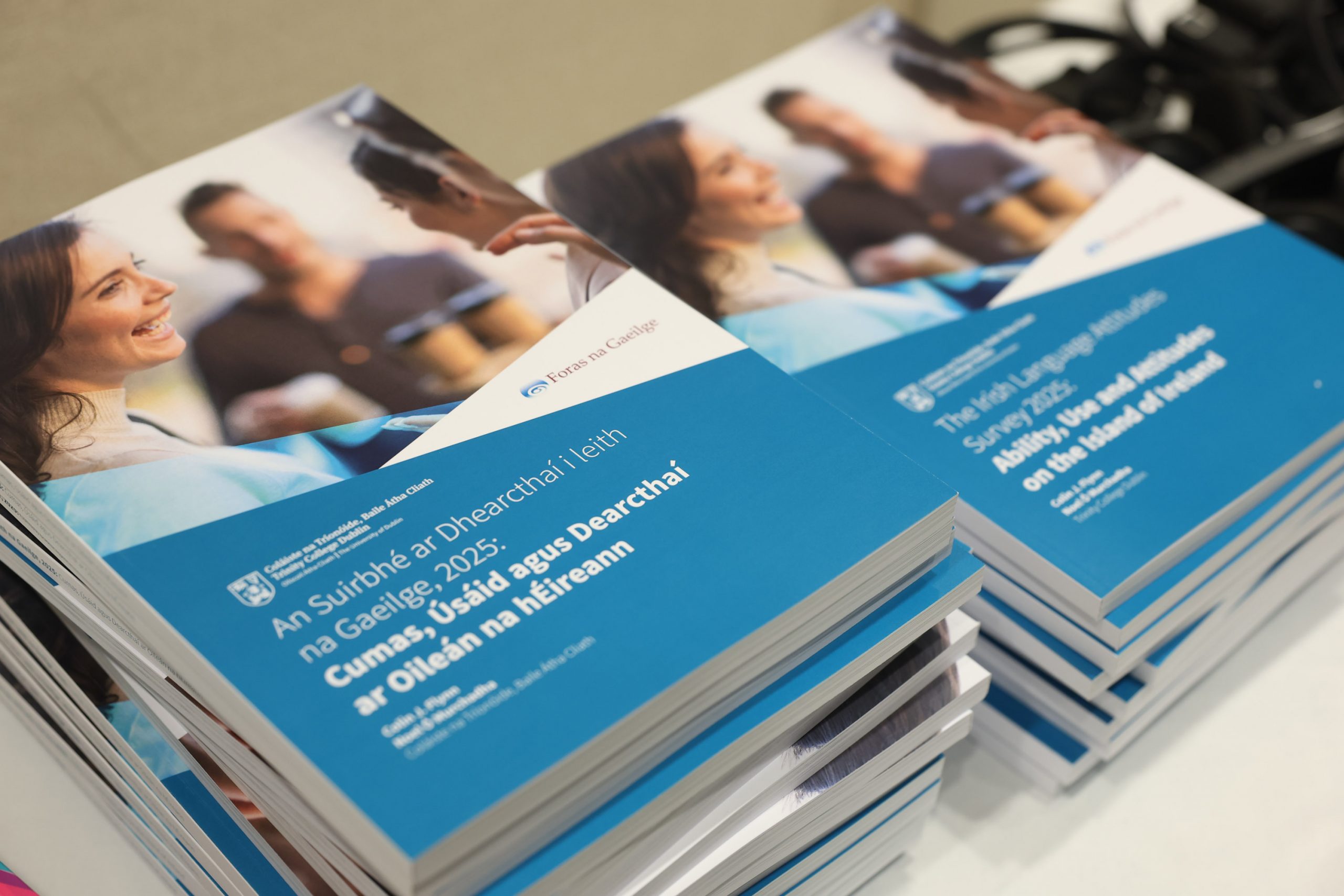
Minister for Rural and Community Development and the Gaeltacht, Dara Calleary TD launched The Irish Language Attitudes Survey, 2025: Ability, Use and Attitudes on the Island of Ireland at an event in Buswell’s Hotel today. The publication is the latest in the longest running major survey series on attitudes regarding the Irish language on the island of Ireland. The study gives a unique and detailed insight into current attitudes and information about language ability on the island of Ireland.
Key findings highlight:
- A majority in both jurisdictions support the Irish language (78% ROI and 55% NI)
- Everyday use is higher than reported in 2013: (by 3% in ROI and by 6% in NI) with people speaking Irish more frequently in Munster, Connaught and Ulster
- 18–24-year-olds are the largest age cohort among regular speakers in both jurisdictions
- The preferred future is bilingual: with English as the main language, and support for greater prominence of Irish (55% in ROI and 44% in NI)
- Support for Irish medium education and the teaching of the Irish language are higher than reported in previous iterations of the survey
- Opposition towards the Irish language is lower across all sectors of society in comparison with results reported for previous surveys. The majority position (60%) among respondents in Northern Ireland who identify as British, and who generally identify as Protestant, is to have no particular feelings towards Irish.
- Self-reported ability in ROI is lower than was reported in 2013, with more respondents reporting perceived difficulty with the language. However, basic ability in NI is higher than was reported in in 2013.
Minister Dara Calleary TD said:
I am delighted to launch this survey today. This research provides us with critical information, both positive and negative, and the survey results will be a valuable source of information and evidence for my Department, for Foras na Gaeilge, for our partners in the Department of Communities in Northern Ireland, and for Irish-language organisations as we plan for the Irish language over the next 10 years. These results will also be a valuable resource in developing the next Government strategy as the current 20 year strategy for the Irish language comes to a close in 2030.
Foras na Gaeilge CEO, Seán Ó Coinn said:
Overall, this research demonstrates a strong base of support for the Irish language across the island, and Foras na Gaeilge will be working closely with our partners in both governments and the Irish-language lead organisations to strengthen this progress, and to expand the daily use of the language.
The research shows a positive snapshot of public attitudes towards the Irish language in the South and among respondents who identify as British in the North – a group that generally identify with the Protestant, Unionist and Loyalist community. A positive finding that has improved significantly since the 2013 survey.
However, we have challenges to face in the South: 50% of respondents in the South self-assessed themselves as having little to no ability in Irish, a concerning finding that is 7% higher than reported in 2013. This reflects an urgent need to improve the learning outcomes for Irish in our schools.
Ends
Further information:
Additional Documents and graphics
The full report, executive summary and supplementary graphics are available HERE
Photographs
Photographs are available from Maxwells/Foras na Gaeilge from 4.30pm, 19 May
Background
Foras na Gaeilge, the body responsible for the promotion of the Irish language throughout the island of Ireland, was founded on the second day of December 1999.
The study was conducted by Colin J. Flynn and Noel Ó Murchadha of Trinity College Dublin in collaboration with Ipsos B&A.
The study was commissioned by Foras na Gaeilge with funding from the Department of Rural and Community Development and the Gaeltacht during summer 2025.
The questionnaire was developed based on an existing questionnaire that has been used since the 1970s, and that has been adapted to include Northern Ireland and to reflect the context of policy and society today.
About the authors
Colin J. Flynn was the first author of this report. He is an Assistant Professor in Applied Linguistics in the School of Linguistic, Speech and Communication Science in Trinity College Dublin.
Noel Ó Murchadha was the Principal Investigator on this project. He is an Associate Professor in Language Education in the School of Education, Trinity College Dublin.